A note on how to read this: dream meanings here are a personal and cultural tradition, offered for reflection and curiosity — not science, and not medical or psychological advice.
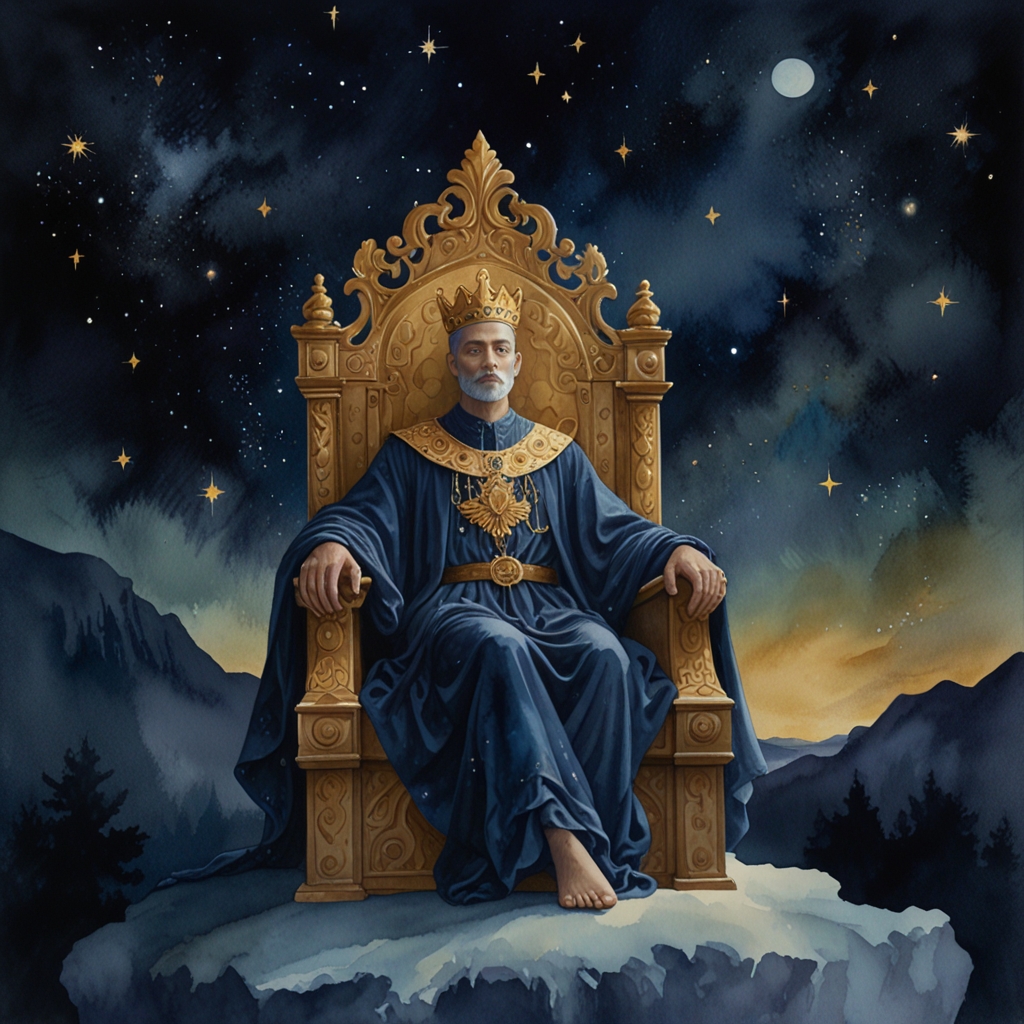
Classical interpreters in this tradition often read the king as an image of sovereignty and the ordering principle—whether external (a figure one obeys or contests) or internal (one's own capacity for judgment and rule). The king embodies both the possibility and the burden of command.
In depth psychology, the king frequently represents the Self in its mature, integrated form—the part of the psyche that knows how to govern its own territory and make conscious choice. Alternatively, he may embody the archetypal father or superego, the internalized voice of law and expectation.
Western tradition emphasizes the king's divine right and moral authority; Eastern symbolism often portrays the sage-king as balanced and harmonious; pre-modern cultures linked kingship to fertility and cosmic order, while modern contexts may accent his distance from the common people.
Common variations
- Dethroned or fallen king
- Loss of authority or a collapse of certainty within. May reflect a transition where old structures of power or self-rule are being questioned or dismantled.
- Young or inexperienced king
- An emerging authority that lacks seasoning. Often signals the dreamer's own newborn sense of agency or leadership struggling to find its footing.
- Benevolent vs. tyrannical king
- The quality of rule—whether wise and protective or oppressive and unjust—mirrors the dreamer's own relationship to power, control, and fairness in waking relationships.
- King in foreign or hostile lands
- Authority displaced or under threat. May reflect inner conflict between different values or a sense that one's power is not recognized or welcomed.
Where this dream tends to come from
Dreams of kings often emerge after assuming new responsibility, witnessing leadership failures, or reflecting on one's own capacity to decide and lead. They may also follow exposure to historical narratives, films, or recent conversations about power and authority.
This is everyday, non-clinical context — a prompt for reflection, not a diagnosis.
Related symbols


Questions
Does dreaming of a king mean I will gain power?
No. The symbol invites reflection on how you relate to authority—both in others and in yourself—not a prediction of future events. It is a mirror, not a forecast.
What if the king in my dream is cruel or weak?
That variation points to a question worth exploring: Do you feel ruled by an unjust or ineffective authority? Or do you harbor doubt about your own capacity to lead wisely? The dream prompts self-inquiry, not judgment.
For reflection and cultural interest — a dream dictionary, not psychological or medical advice.