A note on how to read this: dream meanings here are a personal and cultural tradition, offered for reflection and curiosity — not science, and not medical or psychological advice.
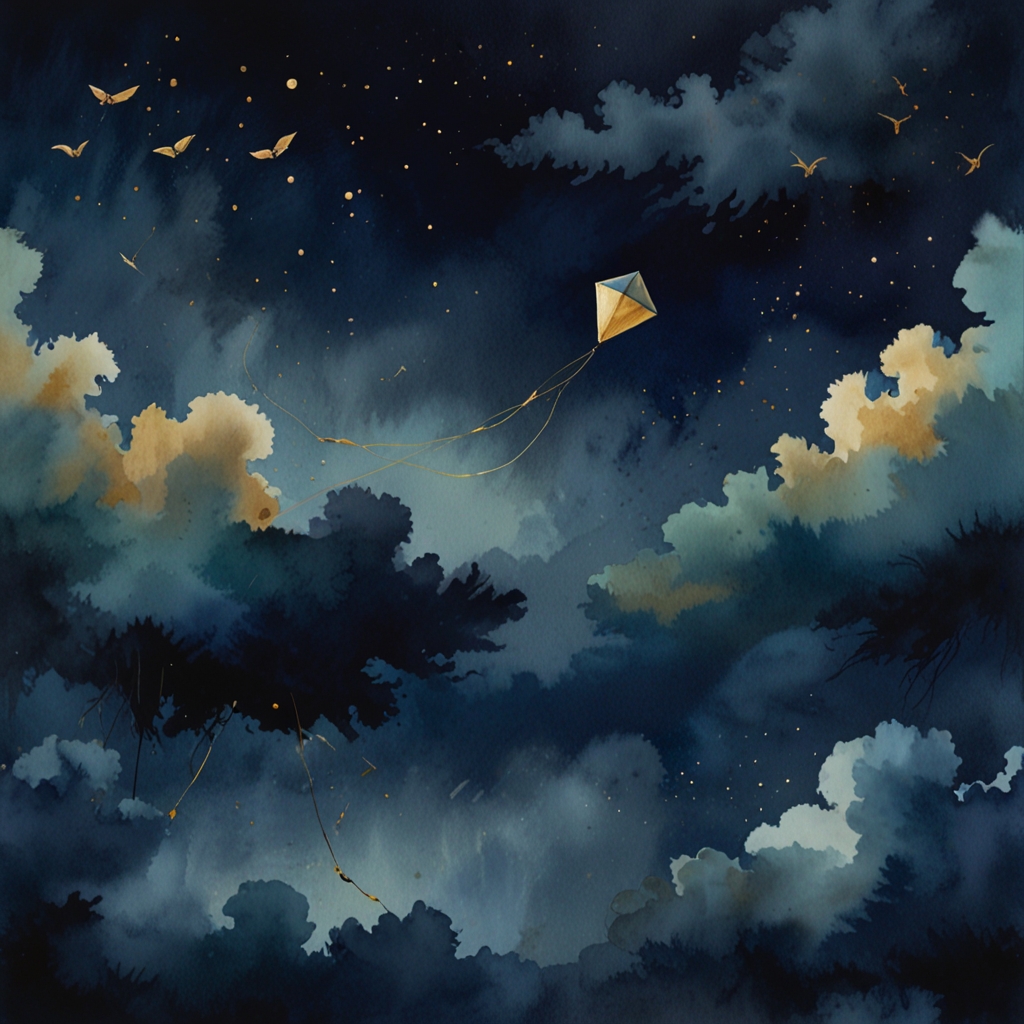
Classical interpreters in this tradition often read the kite as an emblem of aspiration or the soul's upward striving, held aloft by invisible forces (wind, circumstance, effort). The tension between control and release—between the hand holding the string and the kite's distance—mirrors the dreamer's own negotiation with freedom and restraint.
The kite may reflect the ego's attempt to direct or maintain connection with unconscious energies or elevated ideals, while remaining tethered to earth. The dream often surfaces when one is experimenting with autonomy, testing how far ambition or desire can venture while still remaining retrievable.
In East Asian traditions, kites carry rich symbolic weight—particularly in Chinese and Indian cultures where kite-flying is a spiritual or competitive practice; in Western contexts, they more often signal childhood innocence or the lightness of play.
Common variations
- kite loses altitude
- The kite descends or falls from the sky, often reflecting waning confidence, loss of momentum, or the collapse of an effort that once seemed effortless or assured.
- string breaks
- The connection between dreamer and kite severs, suggesting either a desired release or an unwanted severance—the dream prompts reflection on what has slipped away or been let go.
- kite tangled or stuck
- The kite snags on trees, wires, or obstacles, often symbolizing ambitions or desires caught in external hindrance, or internal conflict preventing full flight.
- many kites flying
- Multiple kites occupy the sky simultaneously, suggesting distributed creative energy, shared aspiration, or the dreamer's sense of participation in a larger collective endeavor.
Where this dream tends to come from
Kite dreams often emerge after periods of play, outdoor activity, or childhood memory; they may also follow moments when the dreamer has felt successfully launched into a new phase, or conversely, when ambitions have begun to feel uncertain or precarious. Recent exposure to actual kite-flying, images of kites, or leisure time can also seed such imagery.
This is everyday, non-clinical context — a prompt for reflection, not a diagnosis.
Related symbols



Questions
Does a kite dream mean I will achieve my goals?
No. A kite is a symbol inviting you to notice how you sustain ambition, manage freedom and control, and respond to forces beyond your grasp. It prompts reflection, not prediction.
What does it mean if I am anxious about losing the kite?
Anxiety about losing the kite often reflects your current relationship with something you value—an idea, a person, a sense of potential. The dream may be asking: what am I gripping too tightly, or not gripping enough?
For reflection and cultural interest — a dream dictionary, not psychological or medical advice.