A note on how to read this: dream meanings here are a personal and cultural tradition, offered for reflection and curiosity — not science, and not medical or psychological advice.
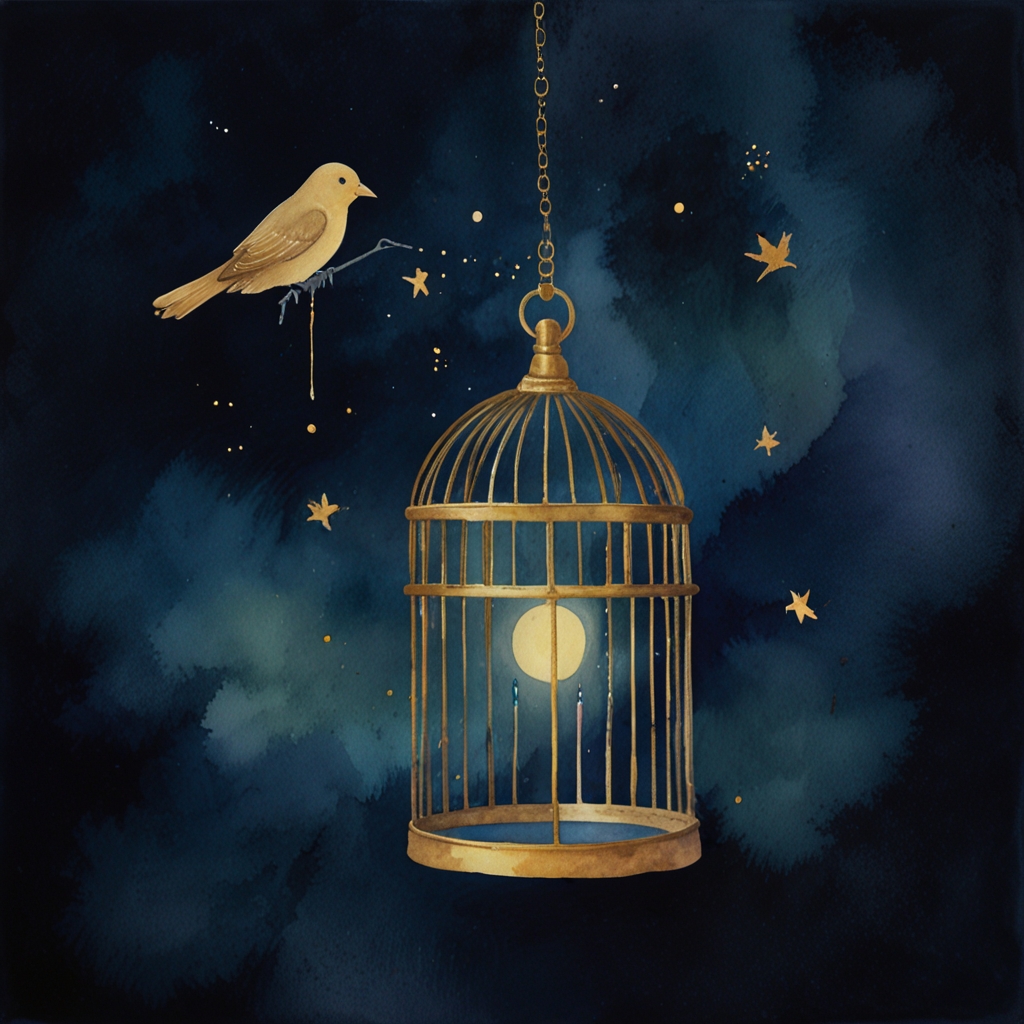
Classical interpreters in this tradition often read the cage as an image of constraint and self-imposed or external boundary. The dream invites reflection on what freedoms the dreamer believes they have lost, or what barriers they perceive between themselves and desired action.
The cage may symbolize the ego's defenses or the dreamer's internalized limits—structures built to protect but also to confine. It can represent the tension between safety and autonomy, or the part of the psyche that fears expansion beyond familiar boundaries.
Western traditions emphasize the cage as oppression and loss of freedom; some Eastern contexts read it as protective sanctuary or a necessary vessel for inner work and discipline.
Common variations
- Empty cage
- An empty cage may suggest a freedom already achieved, or a loss—the dreamer may be confronting what has been released or what they fear losing.
- Ornate or gilded cage
- Luxury or beauty within confinement points to the paradox of comfortable restriction, or the seduction of security at the cost of growth.
- Oneself in the cage
- Being trapped inside invites direct examination of what the dreamer believes constrains them, and what key or door they might seek or create.
- Broken or rusting cage
- Decay suggests weakness in whatever binds; the dreamer may be at the threshold of liberation or recognizing that the constraint has already loosened.
Where this dream tends to come from
Such dreams often arise after a period of feeling trapped by circumstance—a job, a relationship, a decision, or external pressure. They may also follow thoughts about missed opportunities, or simply stem from recent exposure to images or stories involving confinement.
This is everyday, non-clinical context — a prompt for reflection, not a diagnosis.
Related symbols

Questions
Does dreaming of a cage mean I will be trapped?
No. The dream is a reflection of inner experience or preoccupation, not a forecast. It invites you to notice where you feel limited and to consider what freedom or flexibility you wish for.
What if the cage feels safe rather than frightening?
That variation is significant and worth exploring. It may point to a need for boundaries, structure, or rest; or to a conflict between safety and the desire for expansion—both equally valid inner tensions.
For reflection and cultural interest — a dream dictionary, not psychological or medical advice.