
A note on how to read this: dream meanings here are a personal and cultural tradition, offered for reflection and curiosity — not science, and not medical or psychological advice.
Classical interpreters in this tradition often read sand as an emblem of transience and the fragile nature of earthly constructs—the image recalls hourglasses and the finite, flowing character of human time. Sand also suggests foundation that will not hold firm, invoking anxiety about permanence.
From a depth perspective, sand may symbolize the dreamer's encounter with the granular, formless aspects of the unconscious—material that resists solid form or rational grasp. It can also reflect an inner sense of dissolution or the need to rebuild structure from scattered elements.
In Islamic and Middle Eastern contexts, sand often evokes spiritual aridity or trial; in Western romanticism, it signals sublime emptiness and the romance of loss; in Aboriginal Australian traditions, sand and songlines carry ancestral knowledge and place-memory.
Common variations
- Sinking in sand
- The dreamer slowly descends or struggles against sand pulling downward, evoking helplessness and the fear that effort itself hastens the drift inward.
- Sand castles
- Building or watching elaborate structures formed from sand that dissolve or crumble, reflecting the tension between creative impulse and inevitable impermanence.
- Sand in the mouth or eyes
- Abrasive intrusion of sand into sensitive spaces suggests irritation, obstruction of speech, or difficulty seeing clearly—a minor violence of the everyday.
- Desert of endless sand
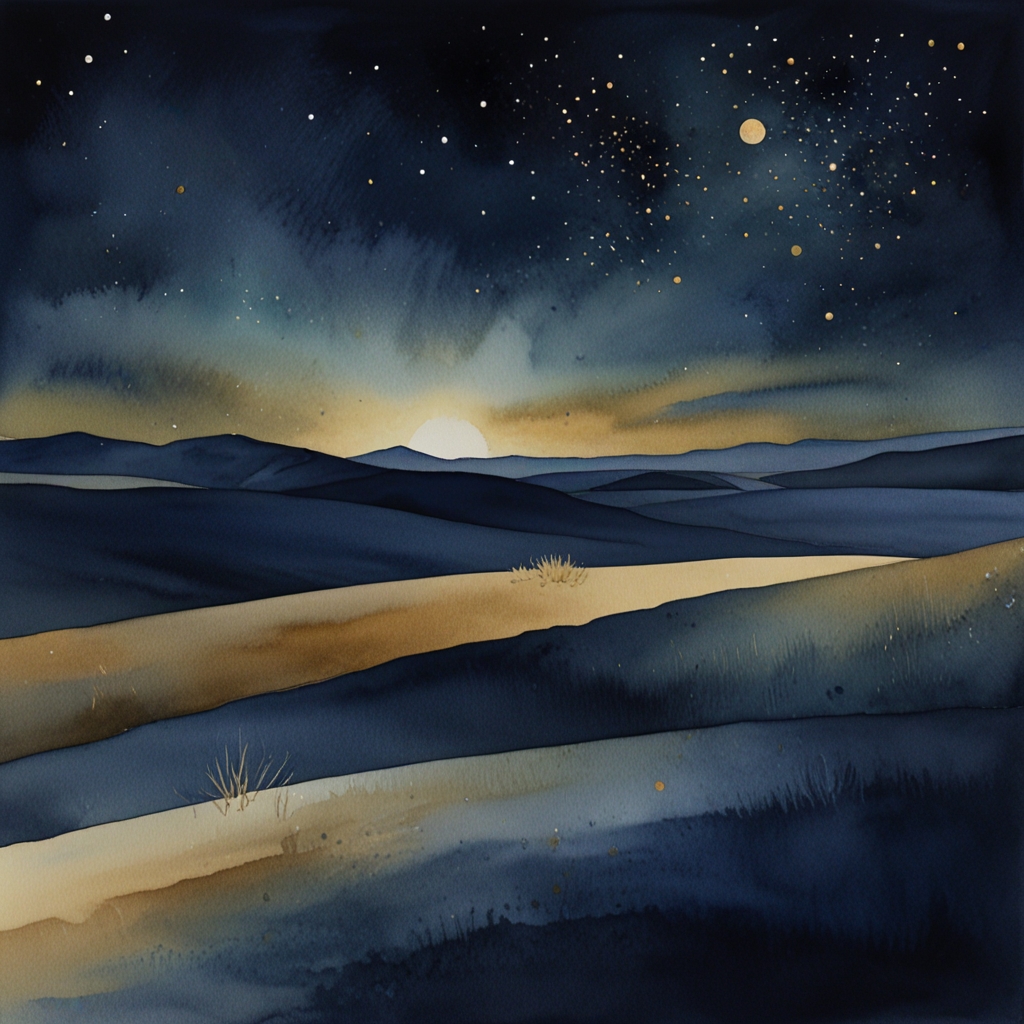
- An expansive, featureless expanse of sand stretching beyond horizon, evoking isolation, vastness, or spiritual wandering without landmarks or rest.
Where this dream tends to come from
Sand dreams often arise after experiencing loss, uncertainty about a life transition, or recent exposure to beaches or deserts. They may also follow periods of stress in which the dreamer feels progress dissolving, or after encountering imagery of time's passage (hourglasses, aging, change).
This is everyday, non-clinical context — a prompt for reflection, not a diagnosis.
Related symbols



Questions
Does dreaming of sand mean something bad will happen?
No. Sand in dreams is a reflective image, not a forecast. It invites the dreamer to consider what feels unstable, impermanent, or hard to grasp in waking life—a prompt for self-reflection, not prediction.
Why do I keep dreaming about sand?
Recurring sand dreams often signal that something in your inner or outer world feels ungrounded—a project lacking solid footing, a relationship shifting, or simply a phase of life marked by flux. The repetition suggests the psyche is asking you to notice and engage with this theme.
For reflection and cultural interest — a dream dictionary, not psychological or medical advice.